
Trustworthy AI
Team Vision/Mission
Mission:
Our team exists to define and implement AI that is trustworthy in theory and in practice for all AI users by developing new frameworks to design, test, and deploy AI in real world scenarios.
Vision:
We envision a future where AI is trustworthy, and therefore trusted, to solve problems that people care about.
News & Events
For the latest news and updates, visit the team-maintained Trustworthy AI site
August 26, 2026 AI progress, possibilities the focus of Sept. 3 campus wide kickoff event
July 24, 2026 Moses one of six UNM faculty promoted to distinguished professors
July 7, 2026 UNM introduces two interdisciplinary research teams advancing to level 2 of Grand Challenges
Current Projects
Trustworthy AI for Mental and Behavioral Health
Artificial intelligence is increasingly being used to provide information, support, and guidance in mental and behavioral health settings. However, inaccurate or misleading responses can have serious consequences when people rely on AI during moments of vulnerability. This project explores whether teams of AI agents can work together to improve the accuracy, reliability, and safety of communication, helping build AI systems that users can trust in high-stakes situations.
Building Trust in Autonomous Systems
As autonomous technologies become more common in transportation, aerospace, and other complex environments, understanding when and why they should be trusted becomes increasingly important. This project investigates how trustworthiness can be defined, measured, and evaluated in AI-enabled autonomous systems. Initial research focuses on autonomous engineered systems inspired by challenges encountered in crewed space operations.
Defining Trustworthy AI
Trustworthy AI means different things to different communities, disciplines, and institutions. This project brings together researchers from law, computer science, the social sciences, and the humanities to examine how concepts such as trust, fairness, accountability, and justice are understood and applied. The goal is to develop a stronger foundation for evaluating AI systems and ensuring they serve the needs of diverse communities.
Humanistic Approaches to Understanding AI
The future of AI should be shaped not only by technical experts but also by the communities it affects. This project uses Digital Humanities approaches to explore how storytelling, ethics, culture, and lived experience can inform the design and governance of trustworthy AI. Through workshops and community engagement activities, participants examine issues of AI literacy, accountability, fairness, access, and responsible implementation.
Research Questions
Our Team
Conveners
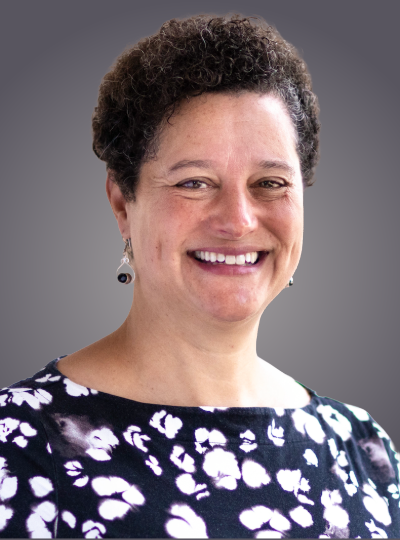 Distinguished Prof. Melanie Moses
Computer Science
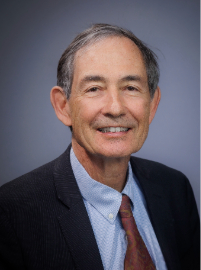
Dr. Christopher Amos
School of Medicine

Professor Pavithra Prabhakar
Computer Science

Mgr. IT Services, ABD. Grace Faustino
Office of the VPR, OILS
Members
Kathy Powers Professor, Political Science/Africana Studies
Claus Danielson Associate Professor, Mechanical Engineering
Manel Martinez-Ramon Professor, Electrical and Computer Engineering
Meeko Oishi Professor, Electrical and Computer Engineering
Stephanie Moore Associate Professor, Organization, Information, and Learning Sciences
Belinda Wallace Professor, English
Fan Xu Assistant Professor, Teacher Ed, Ed Lead & Policy
Tryphenia Peele-Eady Professor, Africana Studies
Eva Rodriguez Gonzalez Professor, Spanish & Portuguese
Timothy Ozechowski Research Professor, Pediatrics Adolescent Medicine
Avinash D. Sahu Assistant Professor, Internal Medicine
Sarah Dreier Assistant Professor, Political Science
Alexander Webb Associate Professor, School of Architecture and Planning
Mueen Abdullah Professor, Computer Science
If you are interested in learning more about Trustworthy AI, please email us.